Értékelés:
Kiadva: 16.08.2006.
Nyelv : Angol
Szint: Középiskola
Irodalom:
Referenciák: Nincs használatban
  • Esszék 'Hobbes v Rousseau on Their Theories of Social Contract', 1.
  • Esszék 'Hobbes v Rousseau on Their Theories of Social Contract', 2.
KivonatZsugorodni

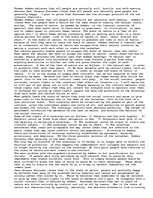
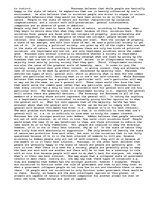
Rousseau has the stronger position over Hobbes. Hobbes believes that people naturally act out of self-interest, so if this is true, how could civil societies form? People would break the laws if it was beneficial to them, and those entrusted to enforce the laws would do so to help themselves. Yes, people are required to obey the sovereign, however, if it is not in their best interest, why do it? In the state of nature they were truly free with absolutely no suppression. The only benefit of leaving the state of nature was protection from each other, but even in the societies that is not fully guaranteed because if it is in the best interest of someone to kill you, because according to Hobbes people only act out of self-interest, they will do it because at the moment it is in their best interest. Rousseau, on the other hand, believes that people are generally happy in the state of nature and people are generally good. If this is true, when there is a need for a society, people are generally going to obey the laws and work with one another and there will be no need for a sovereign to rule with an iron fist because people will want to do what's best for everyone, not simply what's in their own best interest. …

Küldés e-mailben

Az Ön neve:

Adja meg az e-mail-címet, amelyen meg szeretné kapni a linket:

Üdv!
{Your name} szerint érdemes lehet megtekinteni ezt a dokumentumot az eKönyvtárban „Hobbes v Rousseau on Their Theories of Social Contract”.

A dokumentumra mutató link:
https://www.ekonyvtar.eu/w/916626

Küldés

E-mail elküldve