Szerző:
Értékelés:
Kiadva: 30.05.2021.
Nyelv : Angol
Szint: Főiskola/egyetem
Irodalom:
Referenciák: Nincs használatban
  • Prezentációk 'Polish Language', 1.
  • Prezentációk 'Polish Language', 2.
  • Prezentációk 'Polish Language', 3.
  • Prezentációk 'Polish Language', 4.
  • Prezentációk 'Polish Language', 5.
  • Prezentációk 'Polish Language', 6.
  • Prezentációk 'Polish Language', 7.
  • Prezentációk 'Polish Language', 8.
  • Prezentációk 'Polish Language', 9.
  • Prezentációk 'Polish Language', 10.
  • Prezentációk 'Polish Language', 11.
  • Prezentációk 'Polish Language', 12.
  • Prezentációk 'Polish Language', 13.
  • Prezentációk 'Polish Language', 14.
KivonatZsugorodni

Spelling
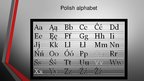
For the bumble-bee effect the Poles took a "z" and added a dot on top for the vibration, thus, creating a "ż", a sound somewhat similar to the second sound (right after d) in the English name "John."

The "l" with a dash "ł" was used for a sound similar to the English "w", since the Polish "w" was already reserved for the sound that in English is written as "v", which can be a bit confusing.

But there is more. The same sounds can be spelled in two different ways. Thus, the same sound can be spelled both "u" and "ó", depending on the word. Also, the sound "h", can be spelled both as "h" and "ch" in different words, like "chata" (hut) and "huta"(steelworks).

The same applies to the bumble-bee sound. The same sound in different words can be spelled as "ż", but also as a two letter combination with "rz".

Some sounds use exclusively a two letter combination like "sz" pronounced not unlike "sh" I shame, "cz" pronounced somewhat similar to "ch" I chain.

A szerző megjegyzéseBővíteni
Küldés e-mailben

Az Ön neve:

Adja meg az e-mail-címet, amelyen meg szeretné kapni a linket:

Üdv!
{Your name} szerint érdemes lehet megtekinteni ezt a dokumentumot az eKönyvtárban „Polish Language”.

A dokumentumra mutató link:
https://www.ekonyvtar.eu/w/835711

Küldés

E-mail elküldve