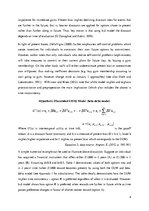
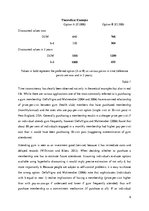
DellaVigna and Malmendier (2006) note that sophisticates (individuals with B equal or near 1) realise implications of having a membership (price-per-visit higher than with pay-as-you-go if underused and lower if gym frequently attended) thus will purchase membership as a commitment mechanism (if purchase at all). If an individual purchases membership he may suffer from sunk cost fallacy – attending gym just to avoid feeling loss. Naïfs, on the other hand, are more likely to overestimate usage and overpay for a membership with under-attending gym.
Although main implications of buying a membership for individuals with time inconsistent preferences are self-control problems (temptation and lack of willpower) for gyms this is a source of revenue. DellaVigna and Malmendier (2004) suggest that prices for investment good should be bellow marginal cost.
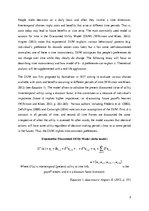
Exponential DUM, most widely used model in presence of time as a factor, implies time consistent preferences – if an individual prefers having 7 apples in 2 weeks to 5 apples in 1 week then he should prefer 7 apples in one week to 5 apples now. O’Donoghue and Rabin (1999, p. 103) state that “(time consistency) ignores human tendency to grab immediate rewards and to avoid immediate costs in a way that our “long-run selves” do not appreciate”. Individuals are subject to self-control problems and present-biased preferences. Hyperbolic beta-delta model, on the other hand implies time inconsistency; due to inclusion of B nearer time periods are discounted heavier than further periods. However, beta-delta model is a descriptive model, and it fails to result in optimizing welfare as it lacks psychological foundation.
…