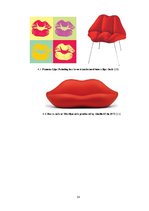
Pop art is an art movement that emerged in the mid 1950`s in Britain and in the late 1950s in the United States. Pop art presented a challenge to traditions of fine art by including imagery from popular culture such as advertising, news, etc. In Pop art, material is sometimes visually removed from its known context, isolated, and/or combined with unrelated material. The concept of pop art refers not as much to the art itself as to the attitudes that led to it. (1)
Pop art employs aspects of mass culture, such as advertising, comic books and mundane cultural objects. It is widely interpreted as a reaction to the then-dominant ideas of abstract expressionism, as well as an expansion upon them. And due to its utilization of found objects and images it is similar to Dada. Pop art is aimed to employ images of popular as opposed to elitist culture in art, emphasizing the banal or kitschy elements of any given culture, most often through the use of irony. It is also associated with the artists' use of mechanical means of reproduction or rendering techniques. (1)
Pop art often takes as its imagery that which is currently in use in advertising. Product labeling and logos figure prominently in the imagery chosen by pop artists, like in the Campbell's Soup Cans labels, by Andy Warhol. Even the labeling on the shipping carton containing retail items has been used as subject matter in pop art, for example in Warhol's Campbell's Tomato Juice Box 1964 or his Brillo Soap Box sculptures.(1)
Acquiring consumer goods, responding to clever advertisements and building more effective forms of mass communication (back then: movies, television, newspapers and magazines) galvanized energy among young people born during the Post-World War II generation. Rebelling against the esoteric vocabulary of abstract art, they wanted to express their optimism after so much hardship and privation in a youthful visual language. (2)
What are the key characteristics of Pop Art?
• Recognizable imagery, drawn from popular media and products.
• Usually very bright colors.
• Flat imagery influenced by comic books and newspaper photographs.
• Images of celebrities or fictional characters in comic books, advertisements and fan magazines.
• In sculpture, an innovative use of media. (2)