Értékelés:
Kiadva: 26.05.2021.
Nyelv : Angol
Szint: Főiskola/egyetem
Irodalom: 3 egység
Referenciák: Nincs használatban

  • Prezentációk 'What Are the Differences between British, American and Irish English?', 1.
  • Prezentációk 'What Are the Differences between British, American and Irish English?', 2.
  • Prezentációk 'What Are the Differences between British, American and Irish English?', 3.
  • Prezentációk 'What Are the Differences between British, American and Irish English?', 4.
  • Prezentációk 'What Are the Differences between British, American and Irish English?', 5.
  • Prezentációk 'What Are the Differences between British, American and Irish English?', 6.
  • Prezentációk 'What Are the Differences between British, American and Irish English?', 7.
  • Prezentációk 'What Are the Differences between British, American and Irish English?', 8.
  • Prezentációk 'What Are the Differences between British, American and Irish English?', 9.
  • Prezentációk 'What Are the Differences between British, American and Irish English?', 10.
  • Prezentációk 'What Are the Differences between British, American and Irish English?', 11.
  • Prezentációk 'What Are the Differences between British, American and Irish English?', 12.
  • Prezentációk 'What Are the Differences between British, American and Irish English?', 13.
  • Prezentációk 'What Are the Differences between British, American and Irish English?', 14.
  • Prezentációk 'What Are the Differences between British, American and Irish English?', 15.
  • Prezentációk 'What Are the Differences between British, American and Irish English?', 16.
KivonatZsugorodni

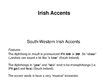
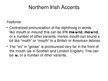
Northern Irish Accents
Features:
Centralized pronunciation of the diphthong in words like mouth or mound: this can be IPA məʉnd, mɑʉnd, or a number of other variants. Hence mouth can sound a bit like “maith” or “moyth” to a British or American listener.
The “oo” in “goose” is pronounced very far in the front of the mouth (as in Scottish and London English). This can be ʉ, or a number of other variants.

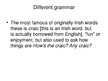
Different grammar
The most famous of originally Irish words these is craic [this is an Irish word, but is actually borrowed from English], “fun” or enjoyment, but also used to ask how things are How’s the craic? Any craic?

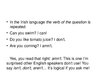
In the Irish language the verb of the question is repeated.
Can you swim? I can!
Do you like tomato juice? I don’t.
Are you coming? I amn’t.

Yes, you read that right: amn’t. This is one I’m surprised other English speakers don’t use! You say isn’t, don’t, aren’t… It’s logical if you ask me!

Küldés e-mailben

Az Ön neve:

Adja meg az e-mail-címet, amelyen meg szeretné kapni a linket:

Üdv!
{Your name} szerint érdemes lehet megtekinteni ezt a dokumentumot az eKönyvtárban „What Are the Differences between British, American and Irish English?”.

A dokumentumra mutató link:
https://www.ekonyvtar.eu/w/566645

Küldés

E-mail elküldve