Szerző:
Értékelés:
Kiadva: 07.05.2021.
Nyelv : Angol
Szint: Főiskola/egyetem
Irodalom: 8 egység
Referenciák: Nincs használatban
Megtekintett időszak: 2010.g. - 2011.g.
  • Kutatási anyagok 'Use of Personal Pronouns in Political Discourse', 1.
  • Kutatási anyagok 'Use of Personal Pronouns in Political Discourse', 2.
  • Kutatási anyagok 'Use of Personal Pronouns in Political Discourse', 3.
  • Kutatási anyagok 'Use of Personal Pronouns in Political Discourse', 4.
  • Kutatási anyagok 'Use of Personal Pronouns in Political Discourse', 5.
  • Kutatási anyagok 'Use of Personal Pronouns in Political Discourse', 6.
  • Kutatási anyagok 'Use of Personal Pronouns in Political Discourse', 7.
  • Kutatási anyagok 'Use of Personal Pronouns in Political Discourse', 8.
  • Kutatási anyagok 'Use of Personal Pronouns in Political Discourse', 9.
  • Kutatási anyagok 'Use of Personal Pronouns in Political Discourse', 10.
  • Kutatási anyagok 'Use of Personal Pronouns in Political Discourse', 11.
  • Kutatási anyagok 'Use of Personal Pronouns in Political Discourse', 12.
  • Kutatási anyagok 'Use of Personal Pronouns in Political Discourse', 13.
  • Kutatási anyagok 'Use of Personal Pronouns in Political Discourse', 14.
  • Kutatási anyagok 'Use of Personal Pronouns in Political Discourse', 15.
  • Kutatási anyagok 'Use of Personal Pronouns in Political Discourse', 16.
TartalomjegyzékZsugorodni
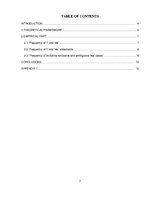
Szám Fejezet  Oldal.
  INTRODUCTION    2
1.  THEORETICAL FRAMEWORK    3
2.  EMPIRICAL PART    5
2.1.  Frequency of ‘I’ and ‘we’    5
2.2.  Frequency of ‘I’ and ‘we’ statements    6
2.3.  Frequency of inclusive, exclusive and ambiguous ‘we’ cases    6
  CONCLUSIONS    8
  REFERENCES    9
  APPENDIX    10
KivonatZsugorodni

CONCLUSIONS
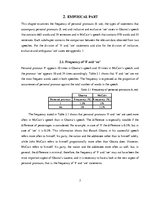
The research has shown that solely the frequency of personal pronouns ‘I’ and ‘we’ does not influence the success of political discourse, because it was found that the percentage of use of personal pronouns in Obama’s speech and in McCain’s speech does not differ tremendously.
Another finding was that the frequency of five types of ‘I’ and ‘we’ statements discussed in this research differs in that McCain’s speech contains more promises and achievements, but lacks realization of current abilities and constraint that possibly made Obama’s speech more successful, because the results showed that Obama’s division of statements was opposite.
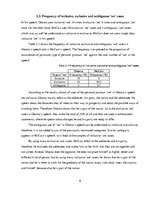
The last important finding is that the use of inclusive ‘we’ may be another reason that made Obama’s speech more successful. It was found that almost all McCain’s uses of ‘we’ are exclusive and do not include the addressee, whereas Obama mostly uses inclusive ‘we’.

A szerző megjegyzéseBővíteni
Küldés e-mailben

Az Ön neve:

Adja meg az e-mail-címet, amelyen meg szeretné kapni a linket:

Üdv!
{Your name} szerint érdemes lehet megtekinteni ezt a dokumentumot az eKönyvtárban „Use of Personal Pronouns in Political Discourse”.

A dokumentumra mutató link:
https://www.ekonyvtar.eu/w/472596

Küldés

E-mail elküldve