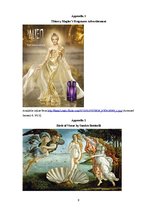
To begin with, the term ‘intertextuality’ should be defined. According to The Penguin English Dictionary (2003:735) intertextuality “is a reference made in one text to a different text, whether overtly or by the choice of similar subject matter, style, etc.” It means that not only quotes or exact phrases can be referenced, but also any type of their transformation or alteration can be considered intertextual. The concept of intertextuality and, therefore, also the concept of plagiarism have gained their importance only in the last century. Although, as Adolphe Haberer (2007:59) says, “tracing influences and filiations, finding allusions, references, quotations and borrowings had always been the pursuit of literary scholars, and imitatio veterum had been the basis of classical poetics”, “before 1500 or thereabouts people did not attach the same importance to ascertaining the precise identity of the author of a book they were reading or quoting as we do now” (Goldschmidt, 1943:88). Mostly the origin of something was not as important as the message it carried. Also, writings and art pieces were perceived as complete and even separate products. Even, still in the last century Saussurean linguists treated sentences as basic units of language and, as Gray (2006:24) puts it, studied them “in a vacuum”. But, as Daniel Chandler (2003) has said, “the notion of intertextuality problematizes the idea of a text having boundaries. […] The boundaries of texts are permeable. [...] no text is an island entire of itself. …