Szerző:
Értékelés:
Kiadva: 08.05.2009.
Nyelv : Angol
Szint: Főiskola/egyetem
Irodalom: 6 egység
Referenciák: Nincs használatban
  • Kutatási anyagok 'Three Different Views on Polysyndeton and Asyndeton', 1.
  • Kutatási anyagok 'Three Different Views on Polysyndeton and Asyndeton', 2.
  • Kutatási anyagok 'Three Different Views on Polysyndeton and Asyndeton', 3.
KivonatZsugorodni


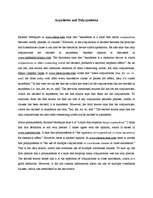
Richard Nordquist in www.about.com says that “asyndeton is a style that omits conjunctions between words, phrases, or clauses.” However, is the conjunction is omitted between the principal and subordinate clause it can also be the rhetorical device called apokoinou. He also says that only conjunctions are omitted in asyndeton. Another opinion is discussed in www.thefreedictionary.com. The dictionary says that “asyndeton is a rhetorical device in which conjunctions or other connecting words are omitted, produced a staccato, emphatic effect.” As we can see, this source also mentions omission of other connecting words, not only conjunctions. Shruti Chandra Gupta in www.literaryzone.com writes that “when conjunctions (but, for, so, or, and) are done away with after every successive clause or phrase for effect, then it’s called asyndeton.” In this case we can see that the author has listed all the conjunctions that are omitted in asyndeton (i.e. but, for, so, or, and). …

A szerző megjegyzéseBővíteni
Küldés e-mailben

Az Ön neve:

Adja meg az e-mail-címet, amelyen meg szeretné kapni a linket:

Üdv!
{Your name} szerint érdemes lehet megtekinteni ezt a dokumentumot az eKönyvtárban „Three Different Views on Polysyndeton and Asyndeton”.

A dokumentumra mutató link:
https://www.ekonyvtar.eu/w/378966

Küldés

E-mail elküldve