Értékelés:
Kiadva: 16.01.2004.
Nyelv : Angol
Szint: Középiskola
Irodalom:
Referenciák: Nincs használatban
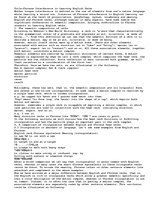
  • Esszék 'Chinese Interference in Learning English Verbs', 1.
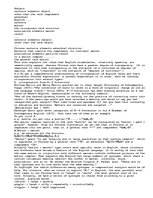
  • Esszék 'Chinese Interference in Learning English Verbs', 2.
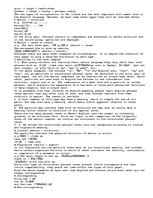
  • Esszék 'Chinese Interference in Learning English Verbs', 3.
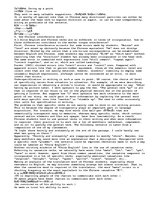
  • Esszék 'Chinese Interference in Learning English Verbs', 4.
  • Esszék 'Chinese Interference in Learning English Verbs', 5.
  • Esszék 'Chinese Interference in Learning English Verbs', 6.
KivonatZsugorodni

Mother tongue interference is defined as the use of elements from one's native language while learning a second one. Instances of Chinese interference in English learning can be found at the level of pronunciation, morphology, syntax, vocabulary and meaning.
English and Chinese verbs, although similar in many aspects, have some subtle but significant differences in semantic composition, bringing difficulties to Chinese students in learning English verbs.
1. The semantic composition of verbs
According to Webster's New World Dictionary, a verb is "a word that characteristically is the grammatical center of a predicate and expresses an act, occurrence, or mode of being...". From this definition we can see that the semantic function of a verb is to describe a motion, may it be an act, occurrence, or mode of being.
However, motion itself cannot make up a motion event. There are other elements associated with motion such as direction (as in "take" and "bring"), manner (as in "prance"), aspect (as in "restart") and so on. All these associative elements, together with motion, constitute a motion complex.

A szerző megjegyzéseBővíteni
Küldés e-mailben

Az Ön neve:

Adja meg az e-mail-címet, amelyen meg szeretné kapni a linket:

Üdv!
{Your name} szerint érdemes lehet megtekinteni ezt a dokumentumot az eKönyvtárban „Chinese Interference in Learning English Verbs”.

A dokumentumra mutató link:
https://www.ekonyvtar.eu/w/186383

Küldés

E-mail elküldve